Landscape Excavation
Yard Shaping for Function and Drainage
Landscape Excavation in Duluth for homeowners preparing sites for hardscaping and correcting drainage issues
High Standards Landscaping provides residential landscape excavation to reshape uneven terrain, establish proper grading around home foundations, and prepare sites for paver patios, retaining walls, and outdoor features. You're dealing with yard areas that slope toward the house, low spots that collect standing water, or rough grades left by original construction crews who prioritized building access over finished landscaping. The excavation work reconfigures those problem areas into functional zones where water drains correctly and outdoor living projects can be built on stable, level ground.
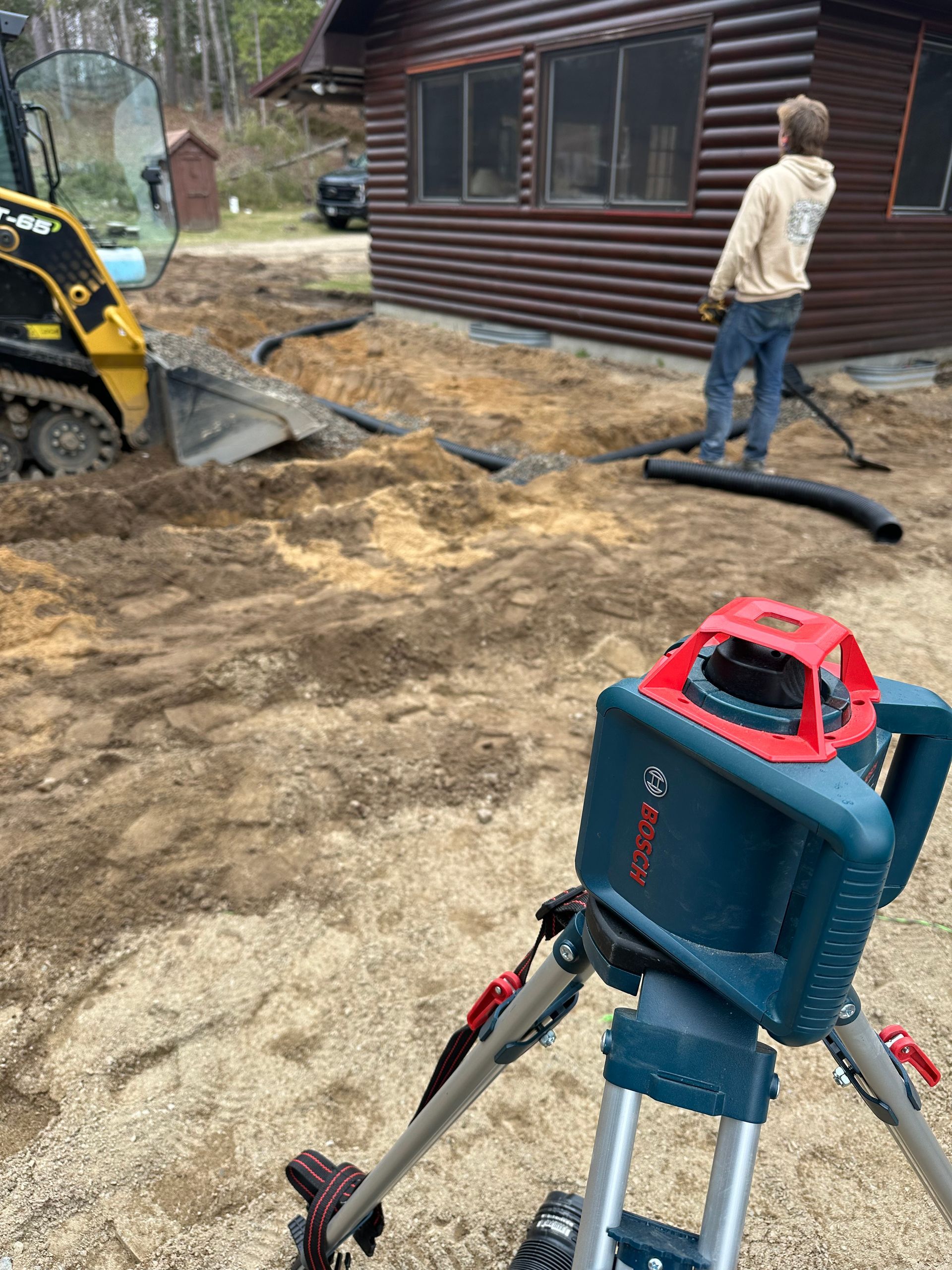
The process involves stripping existing sod and topsoil from the work area, cutting and filling to achieve target elevations, and compacting subsoil in layers to prevent future settling beneath hardscape installations. Equipment is selected based on access constraints typical of residential properties, with compact excavators used in backyards where full-size machines would damage lawns or fail to clear fence gates. Grading is checked with laser levels to ensure water flows away from foundations at the minimum slope required to prevent pooling while keeping outdoor living surfaces comfortably level.
Schedule a site assessment to identify grading corrections and discuss excavation scope for your upcoming landscape project.
What Landscape Excavation Actually Accomplishes
Residential earthwork corrects the rough grading left after home construction, when finish landscaping was minimal or settled unevenly over decades, creating drainage problems and limiting where patios or retaining walls can be installed. Excavation establishes the precise elevations and compacted base layers required for boulder walls to bear weight without tilting and for paver surfaces to remain level through freeze-thaw cycles. Slope reshaping converts steep, unusable hillsides into terraced zones where lawn, gardens, and gathering areas can be developed.
Once excavation is complete, you'll see defined grades that direct surface runoff toward appropriate drainage paths, level building pads ready for hardscape installation, and access routes that allow material delivery without rutting existing lawn areas. The finished earthwork eliminates standing water near your foundation, maximizes usable outdoor space, and provides the stable platform required for every subsequent landscape feature.
Excavation includes stripping vegetation, cutting and filling to grade, compaction, and rough finish grading. Topsoil replacement, seeding, and final landscape planting are handled separately after hardscape construction is complete.
Common Questions About This Service
Homeowners preparing for landscape renovations often want to understand what excavation involves and how it sets up the rest of the project for success.
What happens to the existing topsoil during excavation?
Topsoil is stripped and stockpiled on site if it will be reused for planting areas, or removed if the volume exceeds what your finished landscape requires, keeping only enough for lawn and garden restoration.
How is the finished grade checked for proper drainage?
Elevations are verified with laser levels and string lines to confirm that surfaces slope at least two percent away from the home foundation and toward drainage swales, storm inlets, or natural runoff paths.
Why does the subsoil need to be compacted in layers?
Compacting fill dirt in six-inch lifts removes air pockets and increases density, preventing the ground from settling unevenly once hardscape weight is applied or after heavy rain saturates the soil.
How does excavation for Duluth properties account for existing trees and utilities?
Equipment operators work around established root zones to avoid damaging mature trees, and utility locates are completed before digging to prevent strikes on buried electric, gas, water, or communication lines.
What determines how much dirt needs to be moved?
The amount of cut and fill is driven by the difference between existing elevations and target grades required for drainage correction, retaining wall footers, and level pads for patios or other hardscape features.
High Standards Landscaping operates excavation equipment with attention to preserving residential lawns, minimizing disturbance to neighboring properties, and setting up each project for long-term performance. Request a consultation to walk your property and map out the grading work required for your landscape goals.